
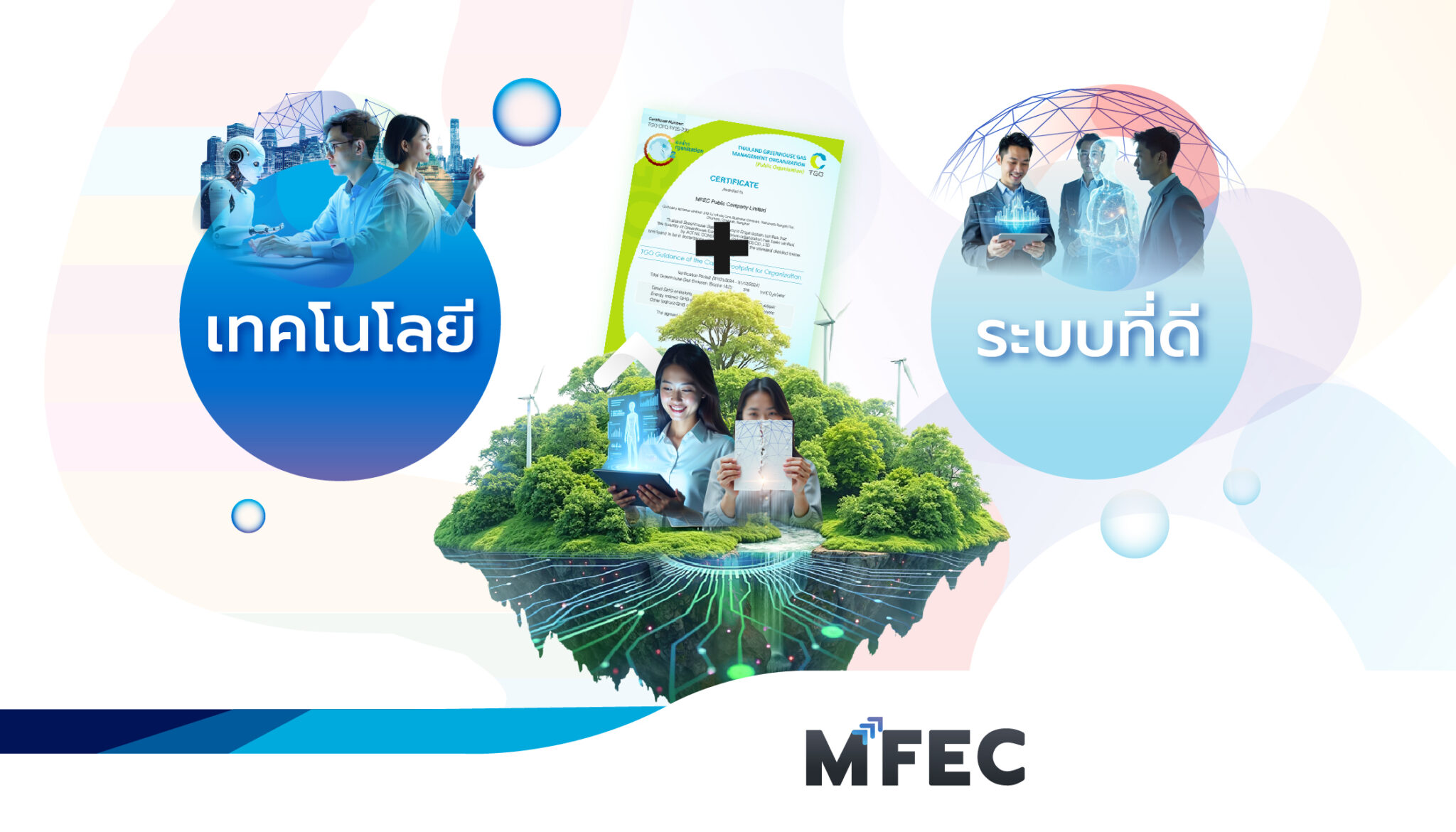
Following MFEC’s official certification of its Carbon Footprint for Organization (CFO) for the year 2024 by the Thailand Greenhouse Gas Management Organization (TGO), the company continues to advance its environmental management practices. MFEC is committed to creating “Eco Processes” through the use of technology and process optimization, aiming to reduce waste at every stage of its operations.
Why “Eco Process” Matters for a Technology Organization
Although technology companies may not generate tangible waste in the same way as manufacturing industries, waste in the digital era is not limited to physical materials. The following are also considered forms of waste:
- Energy loss in data centers
- Time wasted on redundant processes
- Paper usage in workflows that have not yet transitioned to digital systems
- Overuse of equipment or resources
- Human resources spent on unnecessary manual tasks
MFEC is committed to reducing waste across all dimensions of the organization—not only physical waste, but also time, energy, resources, and human potential, all of which should be utilized efficiently and responsibly.
How Technology Helps Reduce Waste
To support its environmental goals while enhancing operational efficiency, MFEC has adopted various technologies to reduce both physical and digital waste. Key approaches include:
Data Discovery – Eliminating Redundant Workflows
Data Discovery is a technology developed by MFEC as part of its Digital Sustainability solution, specifically designed to support sustainability initiatives. It enhances the monitoring, analysis, and reporting of greenhouse gas (GHG) emissions with greater accuracy and efficiency.
Beyond environmental reporting, Data Discovery plays a critical role in reducing digital waste within the organization, such as duplicate data, repetitive tasks, and unnecessary processes. This enables MFEC to improve productivity, reduce resource costs, and drive tangible progress toward sustainability goals.
Process Automation – Removing Unnecessary Steps
By applying Robotic Process Automation (RPA) and Workflow Automation, MFEC has streamlined repetitive processes in support functions such as procurement, equipment requisition, and document approvals. These improvements enable teams to work faster, reduce human error, and significantly lower the workload previously required for repetitive manual tasks.
Digital Forms & e-Documents – Reducing Resource Consumption
MFEC has actively driven the transition from traditional paper-based workflows to a paperless environment through the use of Digital Forms and electronic document systems. This initiative reduces paper consumption and resource waste while enhancing speed, transparency, and accessibility of information across the organization.
Technology + Efficient Processes = Sustainable Growth
MFEC’s role in advancing ESG extends beyond carbon measurement and reporting. It also includes designing sustainable internal systems by combining appropriate technology with effective operational management.
The company’s goal is to build an organization that uses resources responsibly, minimizes waste in all forms, and drives systemic change, whether in energy usage, time management, data handling, or workforce efficiency.
MFEC believes that waste management is a core pillar of sustainable organizational growth, especially in an era where efficiency and accountability must go hand in hand. As such, the company continues to prioritize the development of systems that not only reduce environmental impact but also deliver tangible improvements in operational effectiveness across all areas of the organization—consistently and sustainably.